

G.I.R.L.S Project
Denis Hotel
Denis Hotel
Abuja, FCT- Abuja Nigeria
Abuja, FCT- Abuja Nigeria
Block your calendar on - 2021-05-24
2021-05-24 @ 9:00 am - 5:00 pm
2021-05-24 @ 9:00 am - 5:00 pm
Organizer
DRAC Nigeria & Spotlight InitiativeG.I.R.L.S. Project
Women and girls with disabilities are subject to multiple and intersecting forms of discrimination on the basis of disability, gender, and other non-majority identity markers, such as ethnicity, sexual orientation, religion, poverty, etc. These multiple and intersecting identities limit their enjoyment of all human rights and fundamental freedoms on an equal basis with others. The right of women and girls with disabilities to a life free of violence, exploitation, and abuse is violated by persistent historical and structural unequal power relationships, stigma and stereotypes, and discriminatory attitudes and practices. All these harmful attitudes and practices limit the ability of women and girls with disabilities to exercise their legal capacity and place them at greater risk of experiencing gender-based violence.
Women with disabilities continue to be marginalized and invisible within the disability rights movement and women’s rights movement. Girls with disabilities are also often ignored in children’s rights initiatives and advocacy. Women with disabilities should be part of the women’s movement. Their issues and priorities should also be considered within the disability rights movement to ensure that they have decision-making roles.
The persistence of stereotypes based on gender, disability, and sexuality as well as discriminatory attitudes and the stigmatization of women and girls with disabilities, heighten their risk of violence and abuse, as compared to women and girls without disabilities. These harmful stereotypes range from labeling a woman as asexual or hypersexual, to infantilizing women or assigning them with supernatural qualities. These stereotypes and myths lead to harmful practices including rape, lynching, forced sterilization and other forms of abuse, gender-based violence, and torture.
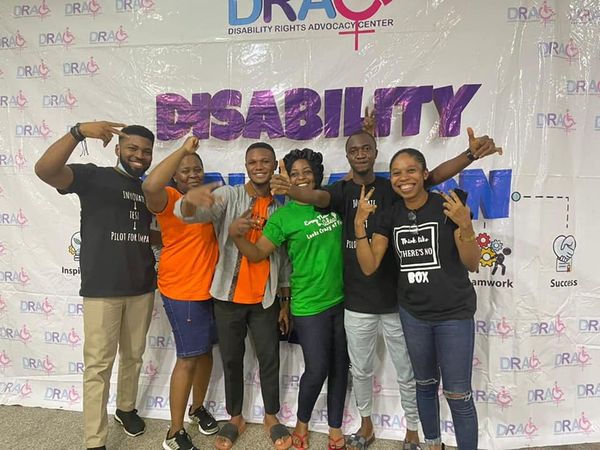
To this end, DRAC with support from the Spotlight Initiative is holding a training aimed at empowering OPDs, women’s rights organizations, autonomous social movements, and CSOs on Disability Inclusion, and building their capacity on advocacy for Gender Equality and Women Empowerment/ Violence against Girls with Disabilities/ Harmful Practices.
1. AIM AND OBJECTIVES
The training is aimed to create space for WGWDs and other relevant stakeholders to become fully involved in actions that will end VAWG/HP and building their capacities to advocate for GEWE and broaden their knowledge base on disability inclusion.
The objectives of the training are as follows:
- To capacitate OPDs, women’s rights organizations, autonomous social movements, and CSOs on Disability Inclusion, Gender Equality and Women Empowerment, Harmful Practices and Violence against WGWDs.
- To secure commitments of OPDs, women’s rights organizations, autonomous social movements, and CSOs to implement sustainable inclusive interventions tailored towards ending VAWGDs/HP and promoting GEWE.
- To strengthen their strategic advocacy skills to be able to make demands from duty bearers towards ending VAWGWDs/HP and promoting GEWE.
 Call Now - Toll Free